9/27/2026
tl;dr: being top 0.1% in a video game is a real achievement, but the rank was never the valuable part. learning how to get good at something was.
to preface this, I’ve hit around top 700 in NA in both tft and league of legends (top 0.1%), and immortal in valorant (top 1%). completely different genres too: strategy, moba, and shooter (I love riot games a bit too much ig; creds/bloopers below :P)
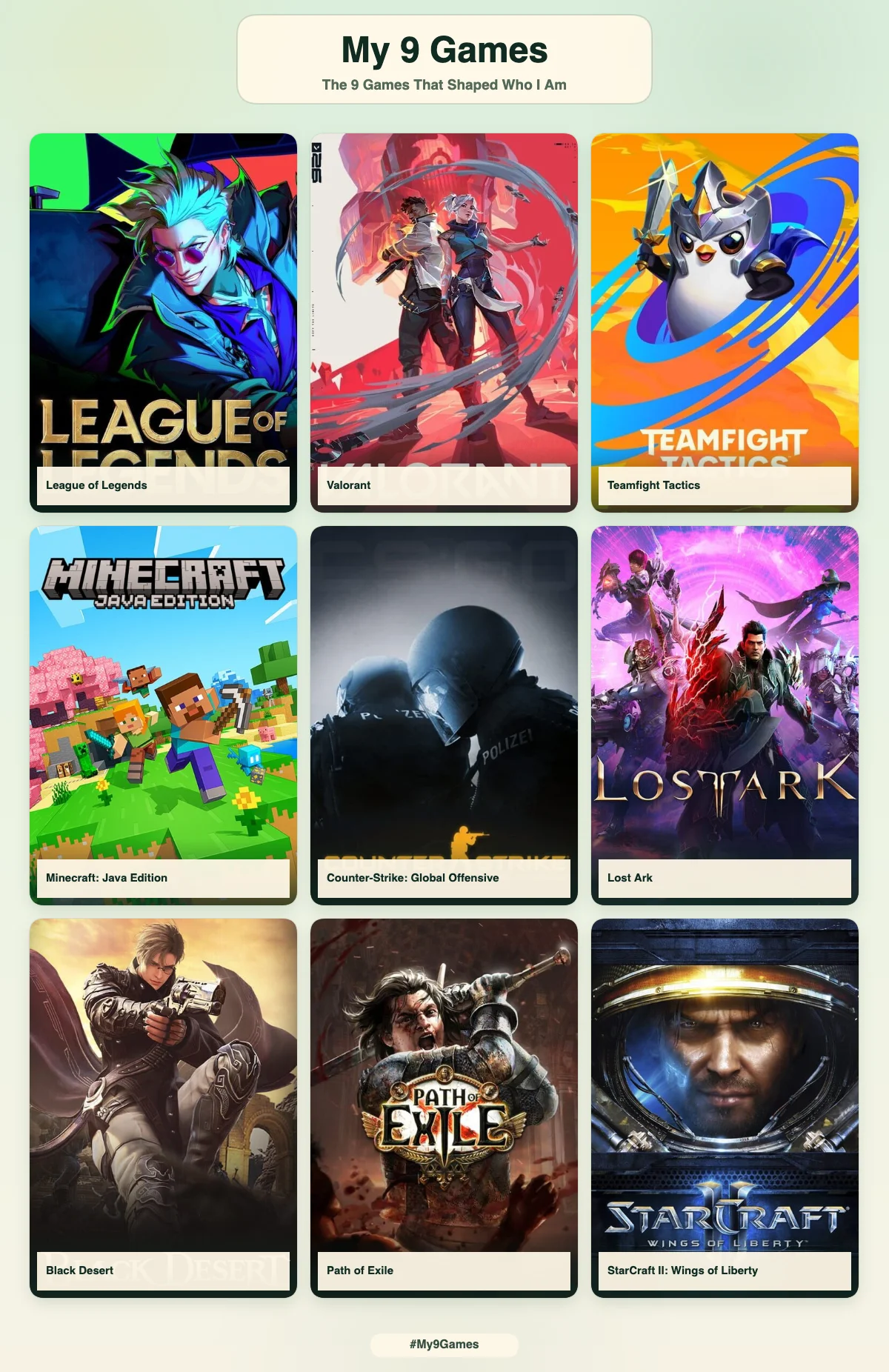
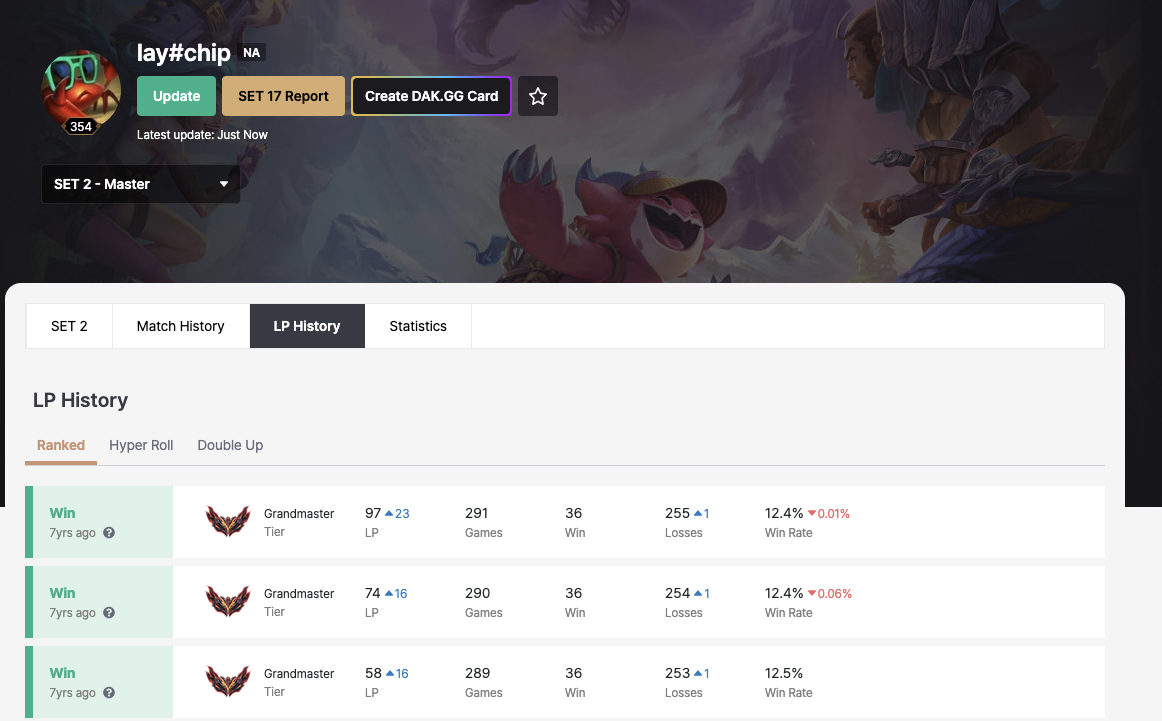
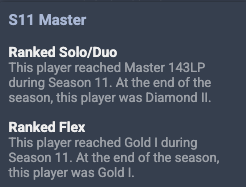
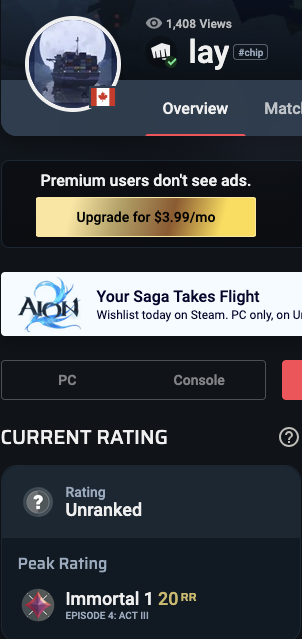
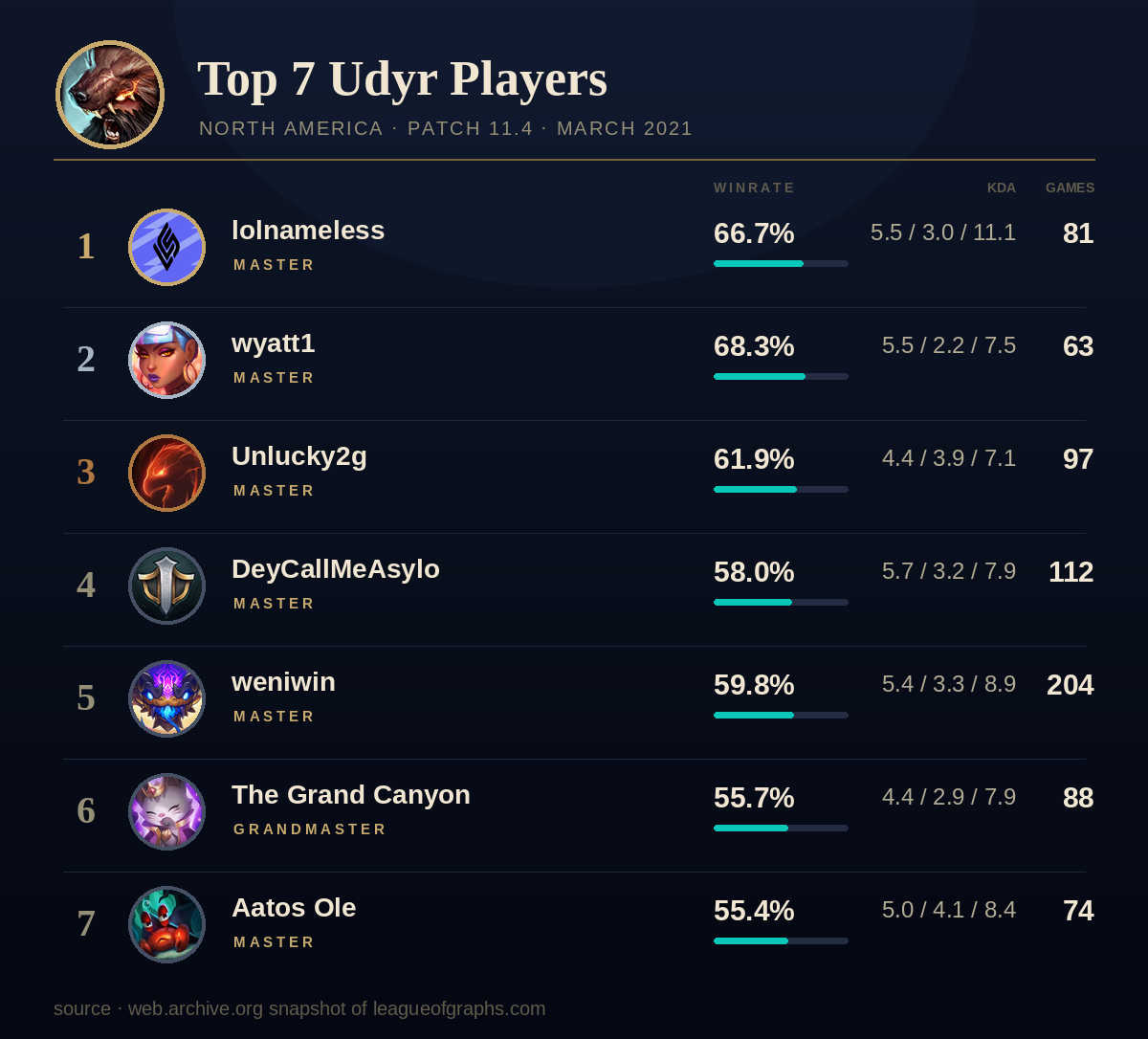
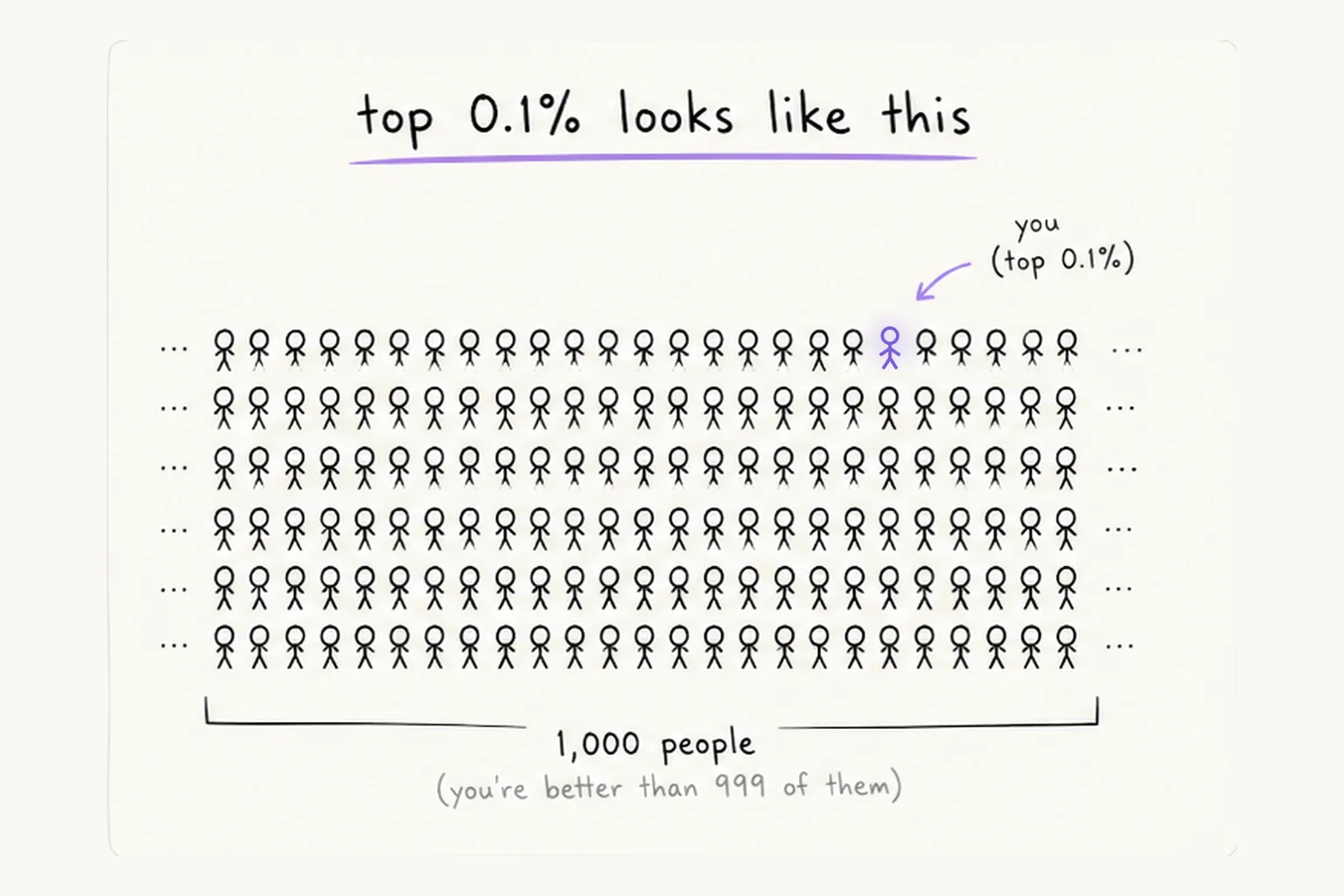
I’ve basically downplayed this my entire life, but I actually think being top 0.1% in a video game is an insane achievement. it’s about as hard as being top 0.1% in chess, poker, academia, or basically anything else competitive.
games just make that kind of achievement accessible to way more people (more on high signal later).
that said, I don’t think games are worth much later in life (I basically only play for social reasons now). but before you’re 20ish? even if you don’t end up going pro or streaming (likely outcomes out of being a goated gamer), I think they can be one of the highest-signal things you can do.
why video games?
so why video games specifically?
for one, your rank is extremely easy to measure. there’s no ambiguity about whether you’re “good” when there’s literally a number telling you exactly how many people are better than you.
they also have an insanely low barrier to entry, especially as a kid (all you need is computer + internet connection). compare that to sports, where you can get genetically or financially gapped before you even start.
and the feedback loops are ridiculously fast. play, fuck around, find out, try again. you don’t have to wait months to find out if something works. you can see the delta next game.
why high rank = high signal
if you hit top 0.1% in anything competitive, one of two things is probably true:
- you subconsciously have an insane innate talent for learning
- you learned to learn, improve, and stay on top of your game
either way, that’s literally the thing every company is trying to hire for.
nobody handed you a curriculum. no teacher, no syllabus, no participation marks. millions of people are trying to climb the same ladder as you, and the game keeps matching you against people exactly as good as you are. you can’t cram for it, and you can’t fake it either (rank is public, anyone can check).
also you had to lose. a lot. like a lot a lot. learning is unfortunately more like a rollercoaster than a straight line: lots of ups and downs, and experiments that don’t work out. staying locked in through all of that is a skill on its own.
and this isn’t just me coping lol. once again, real companies literally hire off this.
quant firms figured this out ages ago. susquehanna literally has a recruiting page just for chess players, and they’re famous for teaching new traders poker because it’s the same skill: making good decisions under pressure with incomplete info.
shopify goes even further. straight from their careers page: “from astrophysicists and Reddit influencers to pro gamers and Olympic athletes, Shopify has a history of hiring people with alternative proof of achieving something difficult.” if you’re world-class at something, they’ll straight up create a role for you, even if you’ve never written a line of code. tobi even offered a retired starcraft pro an engineering internship :0
the rank itself isn’t the point. it’s the receipt that proves you know how to get good.
I truly believe that anyone can hit top 0.1% in basically any video game given a year (or less if you’re goated!) and the right hunger to improve. here’s how.
how to get good
obviously when you first start playing you’re going to be trash. you need training wheels. your main objective is basically just absorbing as much game knowledge as possible and figuring out what is even going on.
after a few weeks though (assuming two to three hours a day), you should be somewhere near the average joe level.
congrats, ur average.
this is where you can actually start getting good.
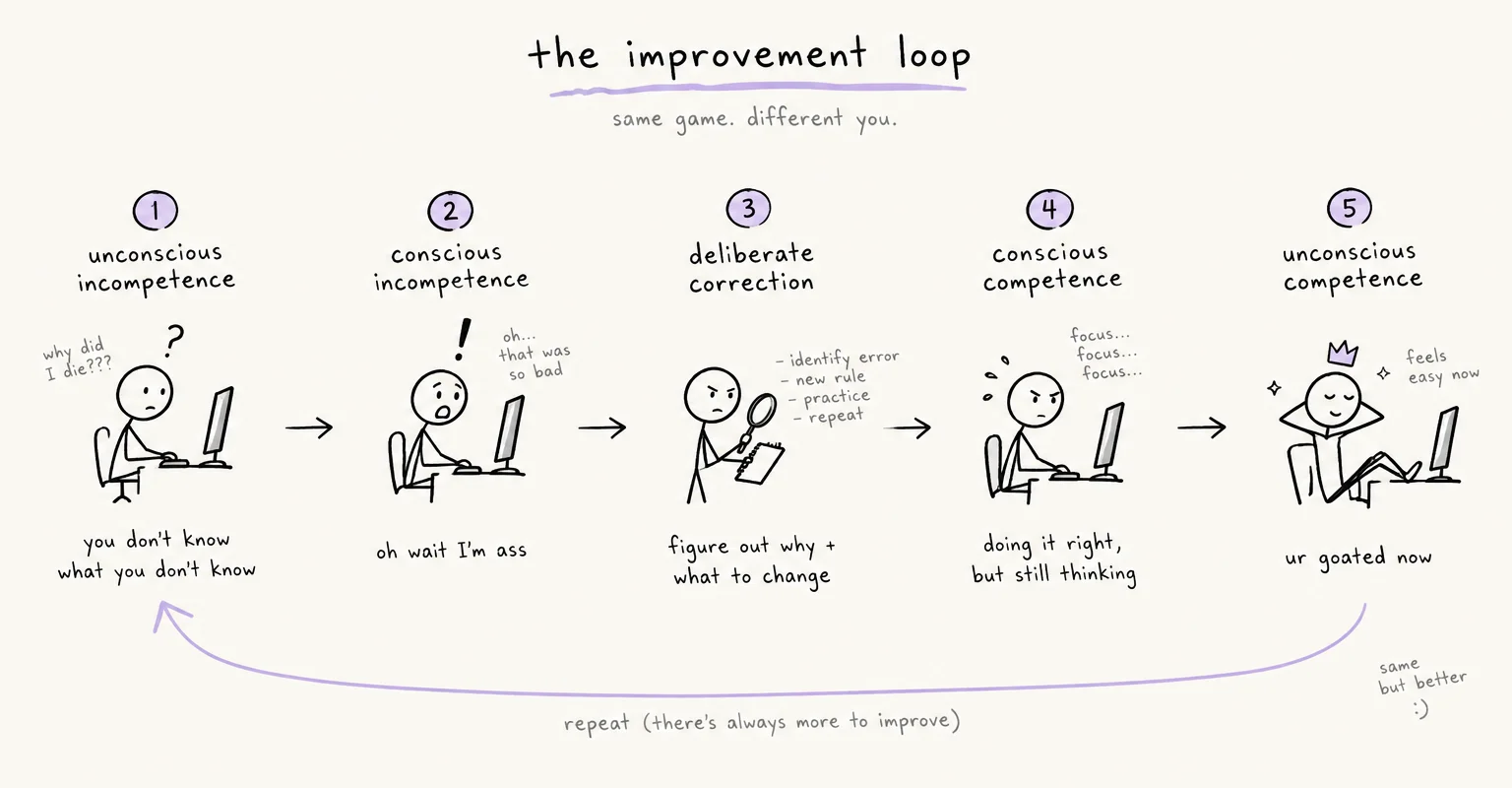
this is my version of the conscious competence model, with a deliberate correction step added. it basically describes how I think improvement works:
- unconscious incompetence – unaware of error
you don’t know what you don’t know - conscious incompetence – realization of error
oh wait I’m ass - deliberate correction – plan for improvement (the one I added)
figure out specifically why ur ass and what needs to change: a new technique, decision rule, habit, protocol, etc. - conscious competence – conscious improvement
ur doing the right thing now but unfortunately you still have to think about it. it eats up your attention - unconscious competence – unaware of your greatness
once again, you don’t know what you don’t know. but ur goated now, so things just happen naturally
if you want the long version, the original four stages are from the science of rapid skill acquisition by peter hollins. I added a bonus correction step to fit my own needs.
where you get stuck
the biggest bottleneck here is usually somewhere between stages 1–3.
stuck at stage 1: your ego is too big and you never even consider that you’re wrong
stuck at stage 2: you correctly realize that you’re wrong but over-index on the wrong thing (it’s not always team gap)
stuck at stage 3: you correctly identify the problem but your plan to improve sucks (or you’re following the wrong advice)
being able to identify why a play was wrong and then convert that realization into a specific rule/protocol to apply next game is actually extremely difficult.
“that was bad” is useless.
“that was bad because I did x. next time y happens, I should do z instead” is something you can actually improve from.
which means learning is a skill too, and you can improve at it the same way you can get better at a game.
hundreds of tiny deltas
you basically repeat these five stages for every tiny part of the game. that’s where the delta between you and everyone else trying to climb comes from.
maybe you position 1% better. maybe your crosshair placement is slightly better. maybe you recognize one situation faster. maybe you know one matchup they don’t. maybe you make one fewer stupid decision every game.
none of these individually makes you top 0.1%.
do this across hundreds of tiny things though, and suddenly there’s a massive gap.
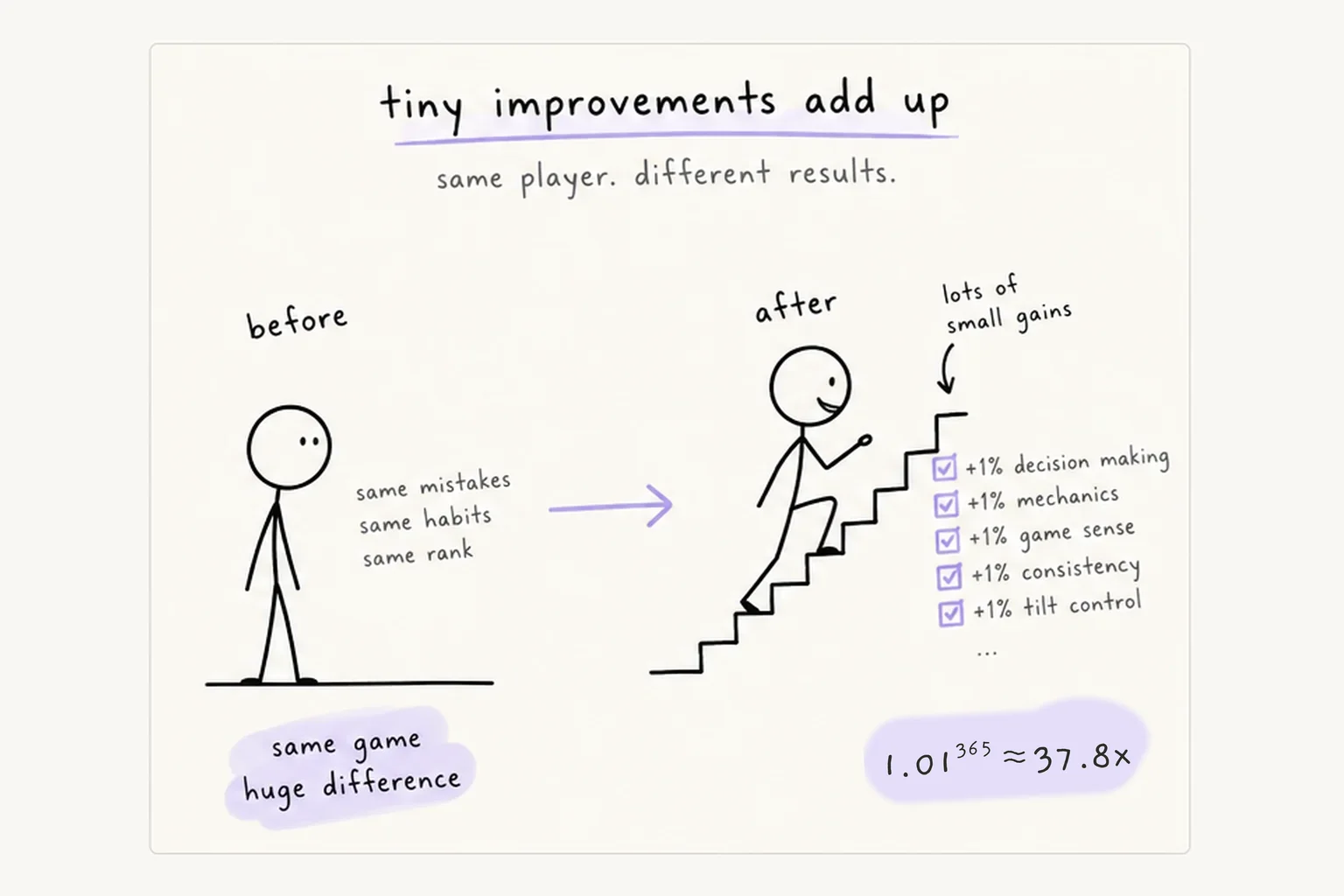
the improvement also has to be extremely focused each game. trying to consciously improve more than one or two small things at once gets really messy unless ur a savant.
you can basically repeat this process all the way to top 1%. by then you should be advanced enough at the game (and at learning the game) that you can identify a lot of your own mistakes.
steal from people better than you
eventually though, learning entirely from yourself stops being enough.
you need to steal from people better than you.
watch what they do. figure out what they do differently. figure out why they do it differently. then steal it and run it through the same process until it becomes unconscious.
don’t blindly copy though. understand why it works, then adapt it to your situation.
for games that means watching pros, top 10 players, or coaches you respect.
personally, the people I stole from:
league: my goats LS and veigarv2
tft: my heroes robinsongz and souless
valorant: woohoojin. despite the controversy (of being boosted :sob:), I unironically learned a lot
for engineering or startups? same thing. look at the successful ones. what are they doing? what do they consistently not do? what do they understand that you don’t?
(in most cases, don’t take advice from people who have never been where you want to be)
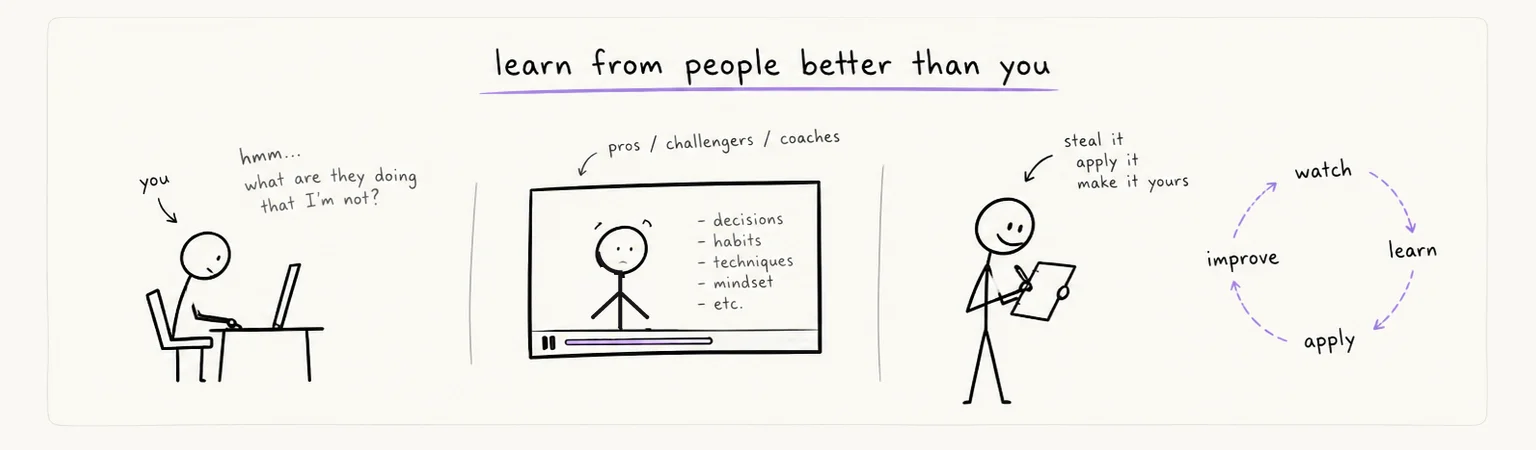
if you actually follow this process for a year, bare minimum you should be pushing top 1%.
and I truly believe with every fiber of my being that with the right mindset, you can push and hit top 0.1% in basically any video game.
at some point though, you get more out of applying that same hunger to something outside the game (entrepreneurship, start ups, sports, work, relationships)
the funny part is that getting good at the video game was never really the valuable skill.
learning how to get good at things was.
glhf :>